
What Does Comedogenic Mean? The Complete Guide
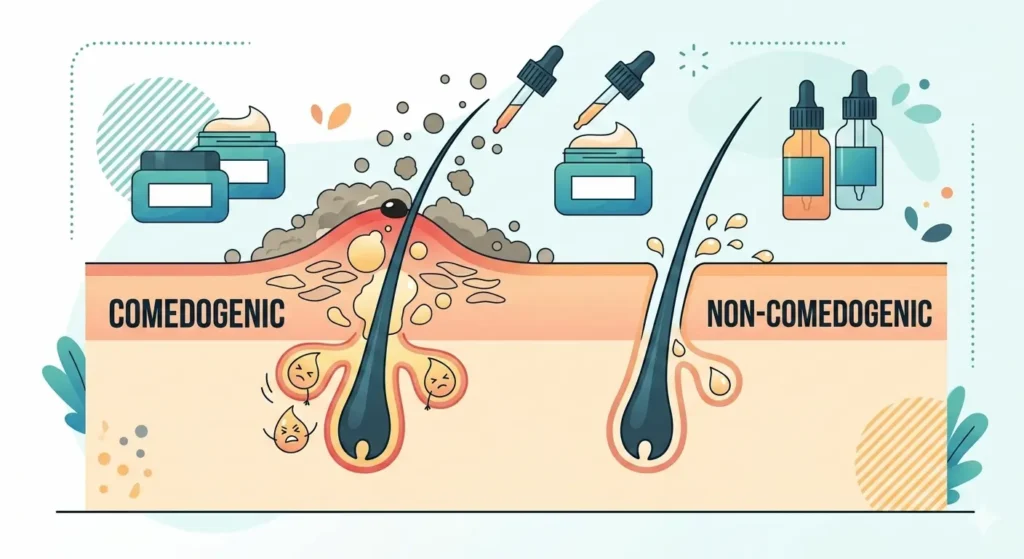
The word “comedogenic” refers to the tendency of a substance to cause comedones—the clinical name for the most basic acne lesions, better known as blackheads (open comedones) and whiteheads (closed comedones).
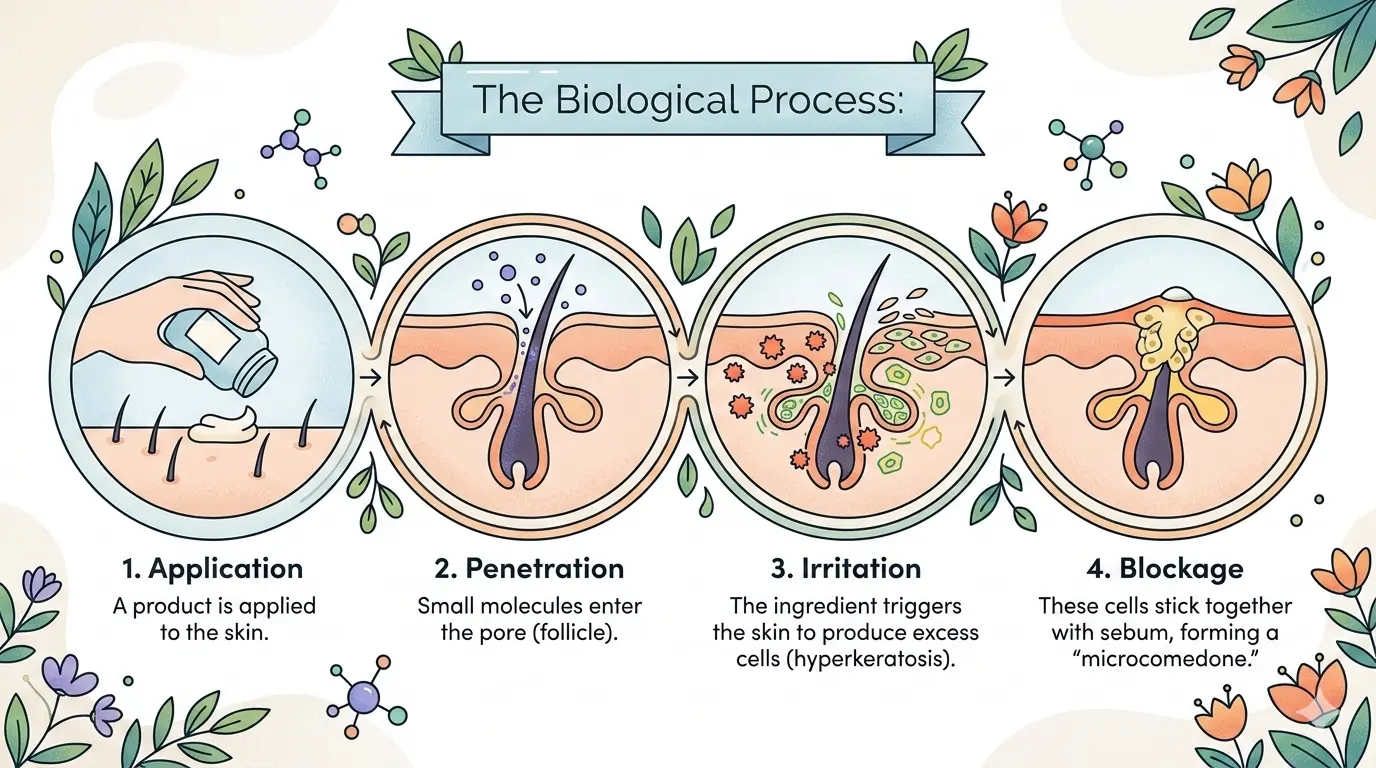
If an ingredient is labeled “comedogenic,” it means it has a high probability of blocking the follicular opening of your skin. When this happens, sebum (oil) and dead skin cells become trapped, creating a plug that eventually turns into a breakout.

The Origins of the Comedogenic Scale
The study of comedogenicity began in the 1970s and 80s, primarily led by dermatologists like Dr. Albert Kligman. To protect consumers from “cosmetic acne” (acne caused specifically by makeup and skincare), researchers developed a testing method to see which ingredients triggered a reaction in the skin’s pores.
The Origins of the Comedogenic Scale
This scale is the backbone of our pore clogging checker. It allows you to move beyond marketing buzzwords and look at the hard data of an ingredient’s impact on your skin health.
Non-Comedogenic
An ingredient with a rating of 0 is considered completely non-comedogenic and will not clog pores. These ingredients are the "Gold Standard" for acne-prone skin because their molecular structure is either too large to enter the pore or they simply do not interact with skin sebum in a way that creates a plug. These are the safest options to look for when using a non comedogenic checker for daily moisturizers or base oils.
Low Risk
A rating of 1 indicates a very low probability that the ingredient will cause a breakout. While not technically "zero," these ingredients are tolerated by the vast majority of people, including those with sensitive or reactive skin. They are often used as stable base ingredients in high-quality skincare without causing significant congestion.
Moderately Low Risk
Ingredients rated at level 2 are still considered relatively safe for most users. However, for individuals with extremely oily skin or a high genetic predisposition to acne, these ingredients may occasionally contribute to minor congestion over long-term use. In a pore clogging checker, a 2 is usually marked as "Safe" for most, but "Proceed with Caution" for the most severe acne cases.
Moderate Risk
This is the "tipping point" on the scale. An ingredient with a rating of 3 has a significant chance of causing "comedones"—the scientific term for whiteheads and blackheads. While it might not cause an immediate cyst, it often leads to a slow buildup of debris inside the pore. If your comedogenic checker flags an ingredient as a 3, it is generally recommended to avoid it in "leave-on" products like foundations or night creams.
High Risk
A rating of 4 indicates a high likelihood of clogging pores for almost anyone with a tendency toward acne. These ingredients are notorious for triggering "cosmetic acne" because they are highly occlusive or chemically irritating to the pore lining. Most expert acne ingredient checkers will flag a 4 in bright red as a "Major Trigger" that should be removed from a skincare routine immediately.
Very High Risk
(Pore Clogging "Red Zone")
Level 5 is the highest possible rating on the scale. Ingredients in this category, such as Wheat Germ Oil or Sodium Chloride, are almost guaranteed to cause blockages in acne-prone individuals. Even in small concentrations, these pore clogging ingredients can cause rapid and severe breakouts. These should be strictly avoided in any product that is intended to stay on the skin for more than a few minutes.
Why "Non-Comedogenic" Labels Can Be Misleading
One of the most important lessons in skincare is that the label “Non-Comedogenic” is not a legal guarantee. Because there is no strict FDA regulation on the use of this term, a company can label a product as “pore-safe” even if it contains ingredients that score a 3 or 4 on the scale.
This is why a manual comedogenic ingredient checker is essential. You cannot always trust the front of the bottle; you must verify the back of the bottle.
Master Your Skincare Knowledge
Understanding the comedogenic meaning is just the beginning. Explore our other resources to build a 100% acne-safe routine
Curated Safe Lists
Explore our expert-ranked guides for the Best Non-Comedogenic Products and Skincare Routines.